
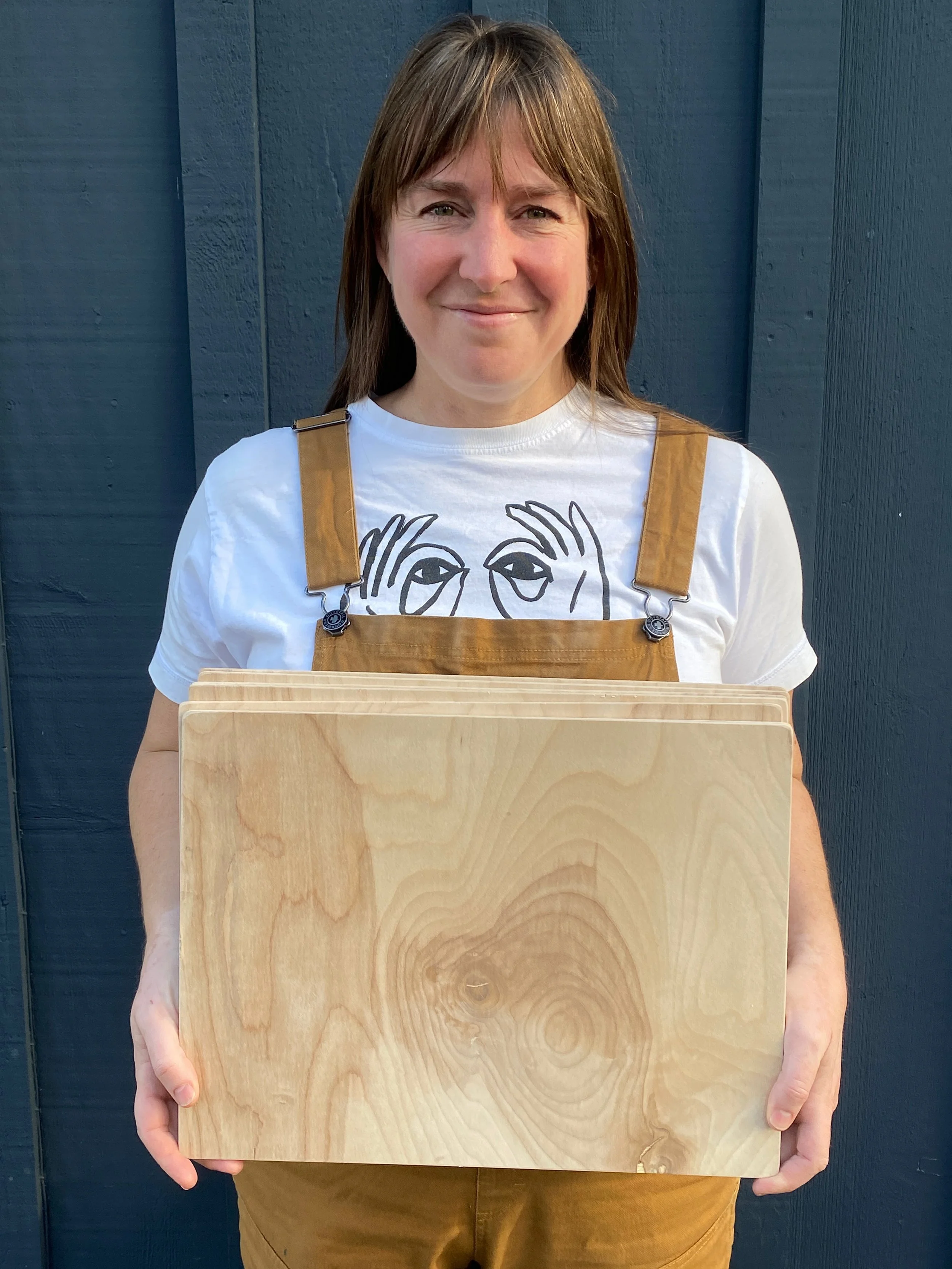
I love painting with wooden palettes!
This blog post tells you all you need to know to make your own and get it ready for oil painting.
Any smooth-ish plywood will work - I made a bunch of nice ones and have some for sale here.
This video shows you how to prepare a new, raw wooden palette for painting.
You can purchase palettes from art suppliers or, better yet, use a piece of plywood. A lot of palettes have a thumb hole, which you really don't need. In fact, the thumb hole just limits the amount of space you have for mixing paint. (Why is the thumb hole even there? Great question - more on that in another post.)
Get decent plywood, nothing too rough. I used a piece of half-inch thick plywood here (I accidentally call it quarter inch in the video - oops!) Half-inch is fine for your studio, but if you want to take it anywhere, get the quarter-inch. Have the outer dimensions cut to whatever size you want. You can sand it, but you don't have to be too fussy about it.
You will need linseed oil - I'm using artists grade, but you can use hardware store grade for this instead. You can also use stand oil or boiled linseed oil.
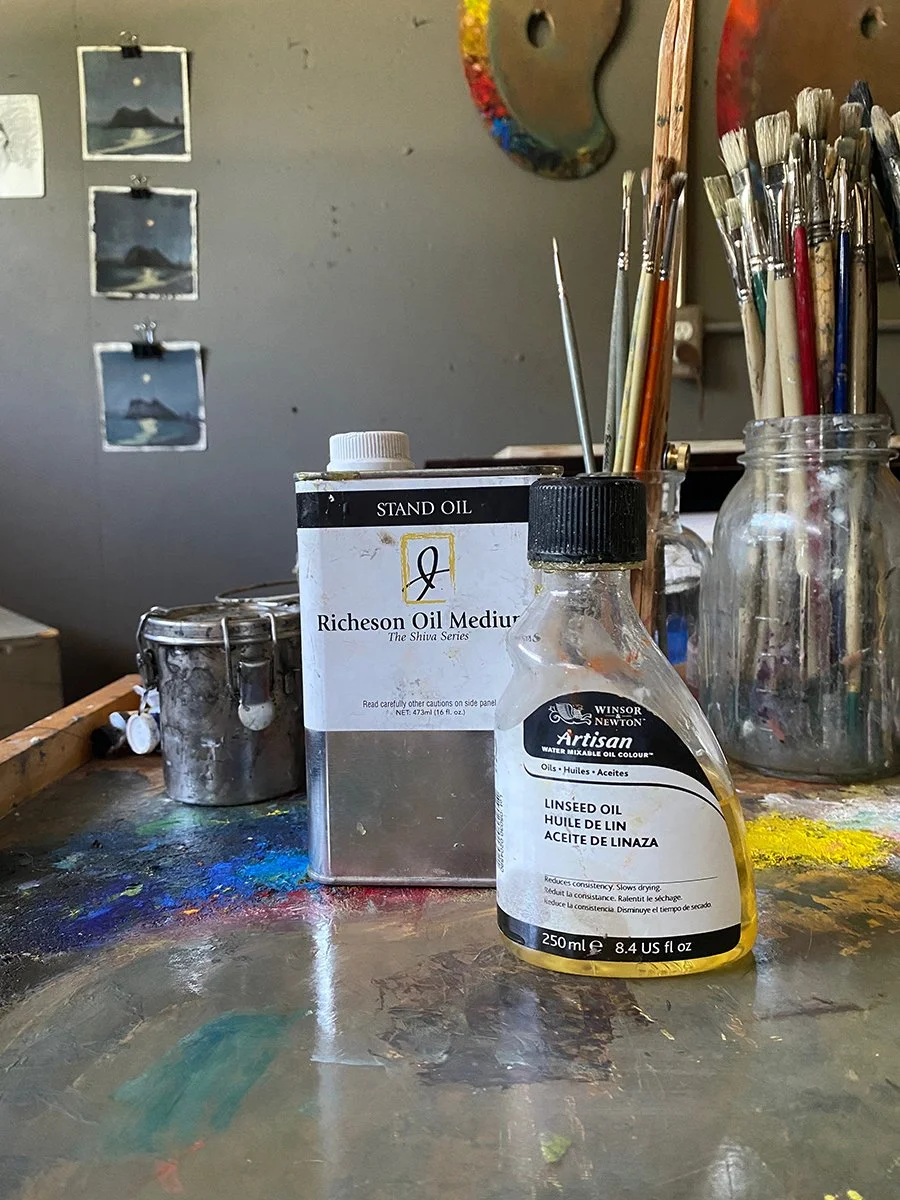
Linseed Oil
For this purpose you can use stand oil, artist’s grade, hardware store, boiled.
Pour the linseed oil onto the wood, spread it with a palette knife. The wood will absorb the oil so delightfully. The first time it really drinks it up. Wipe the excess with a rag. Let this dry for a few days and add more oil, spread it and wipe it down.
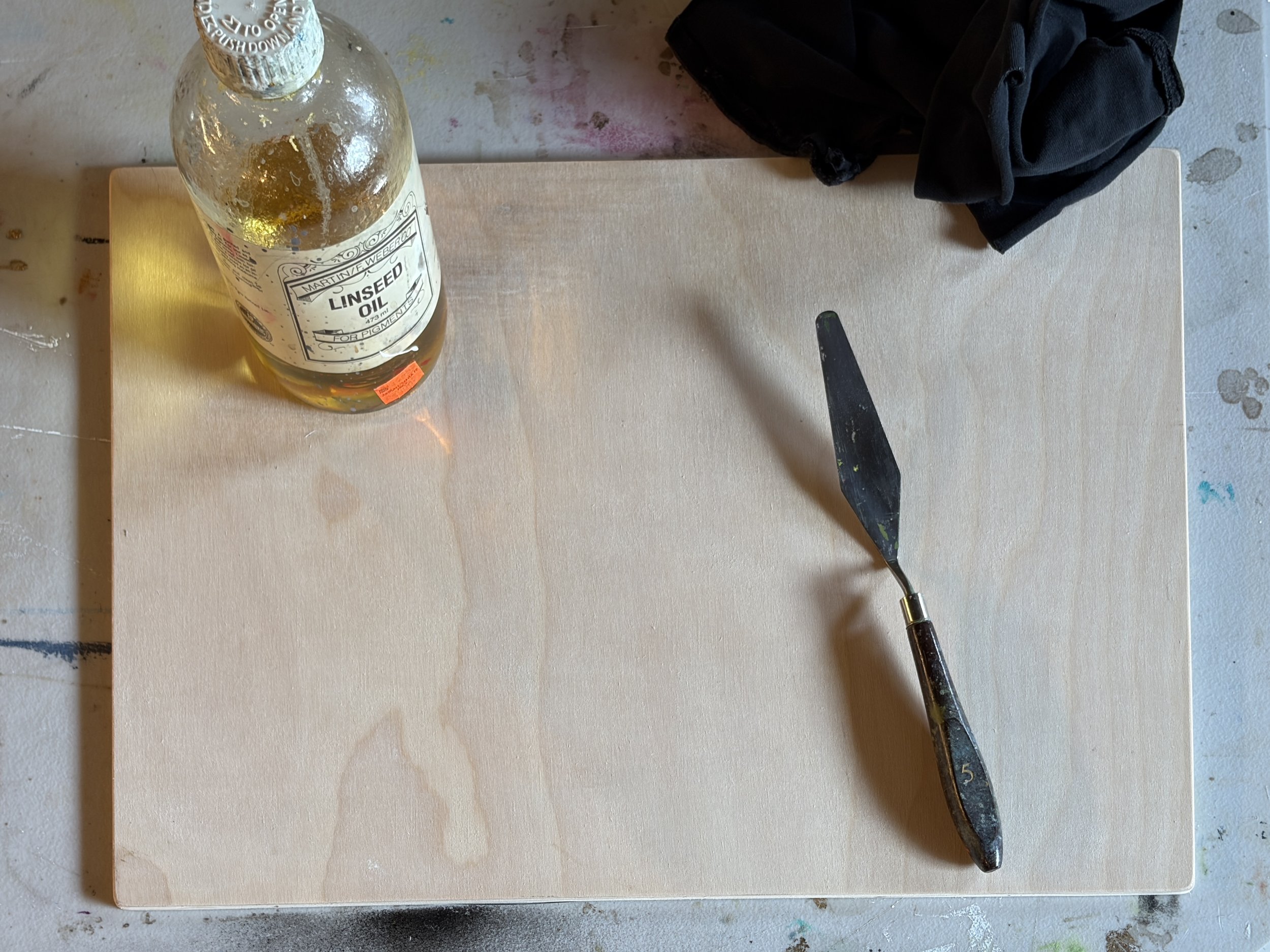
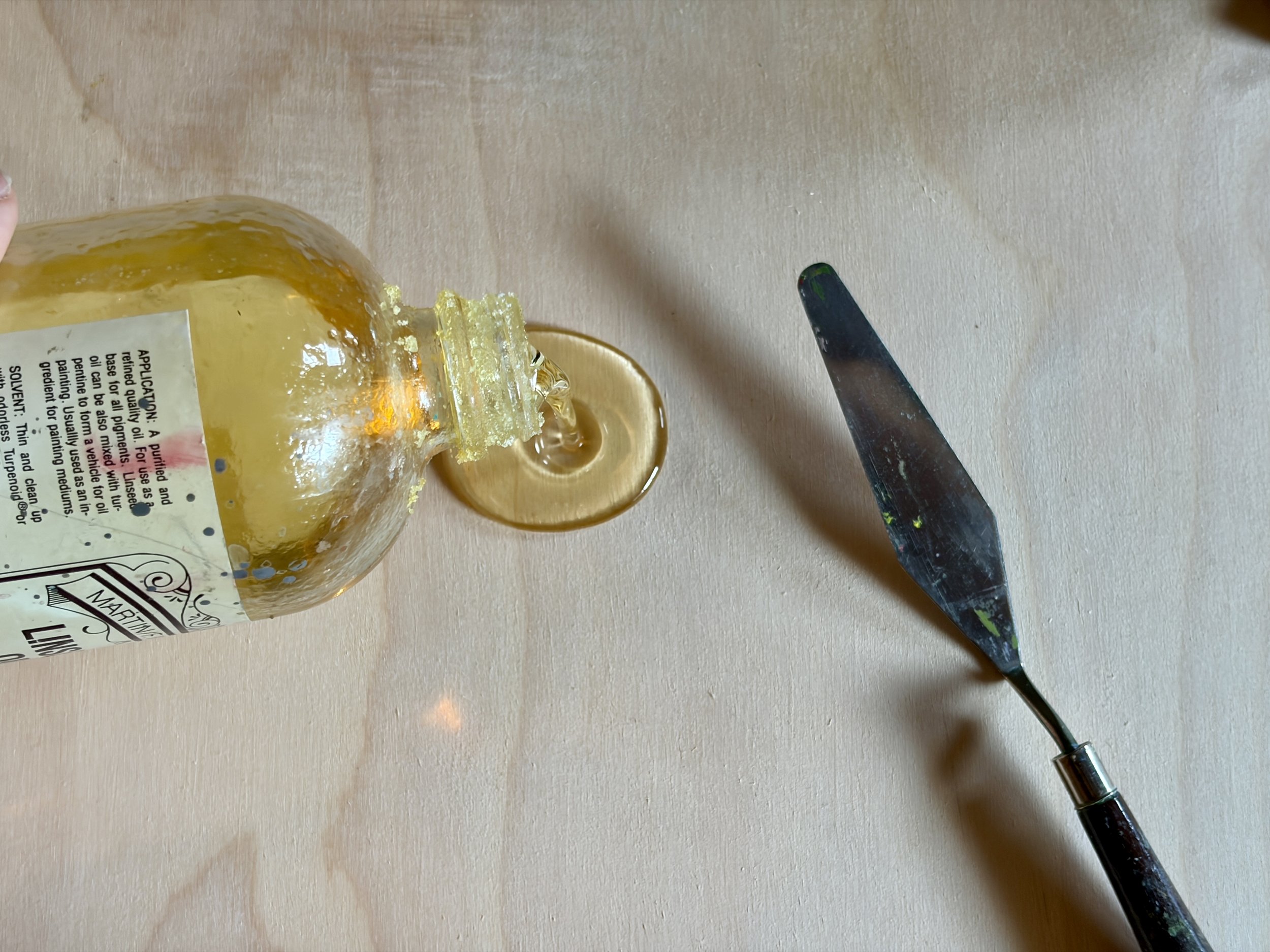
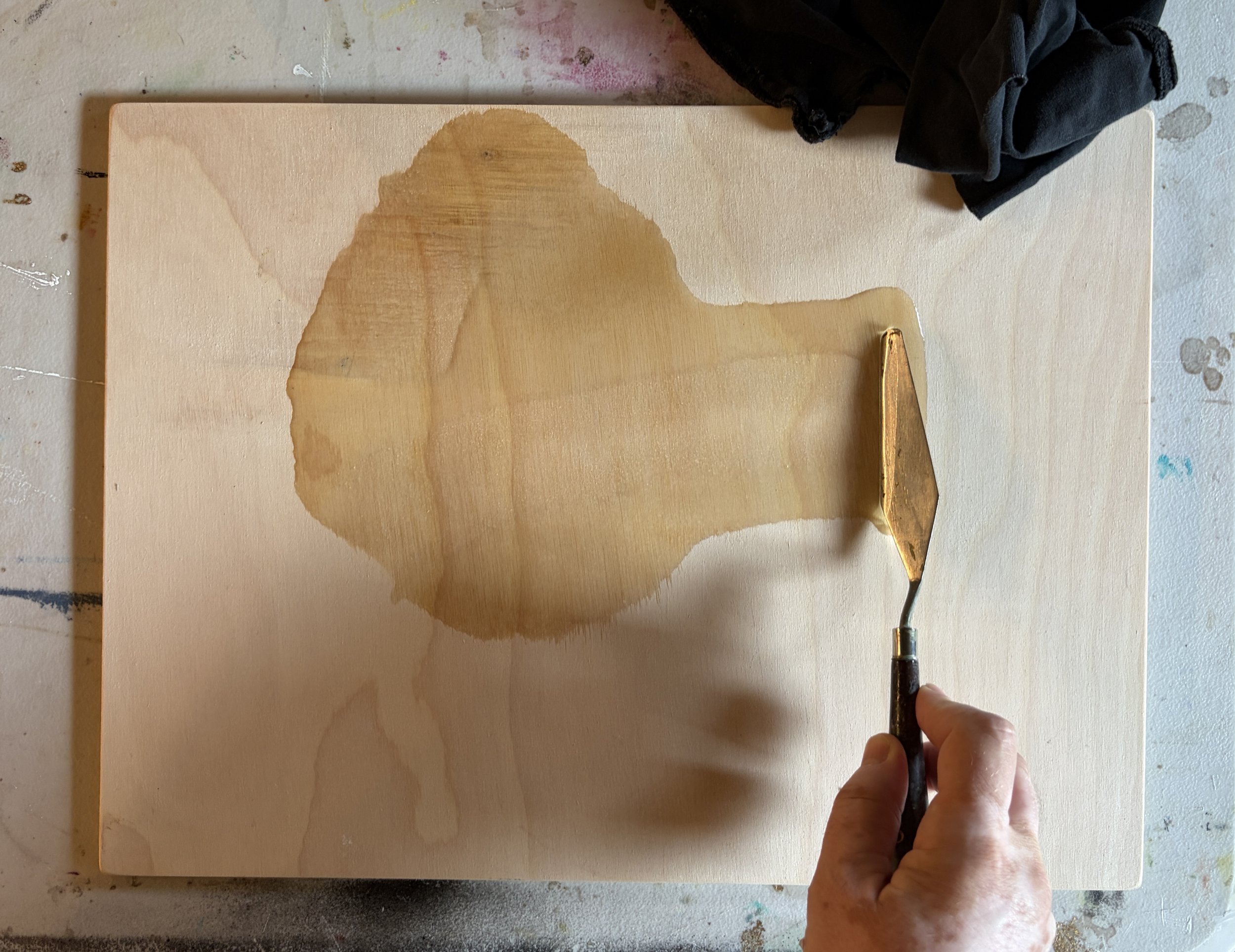
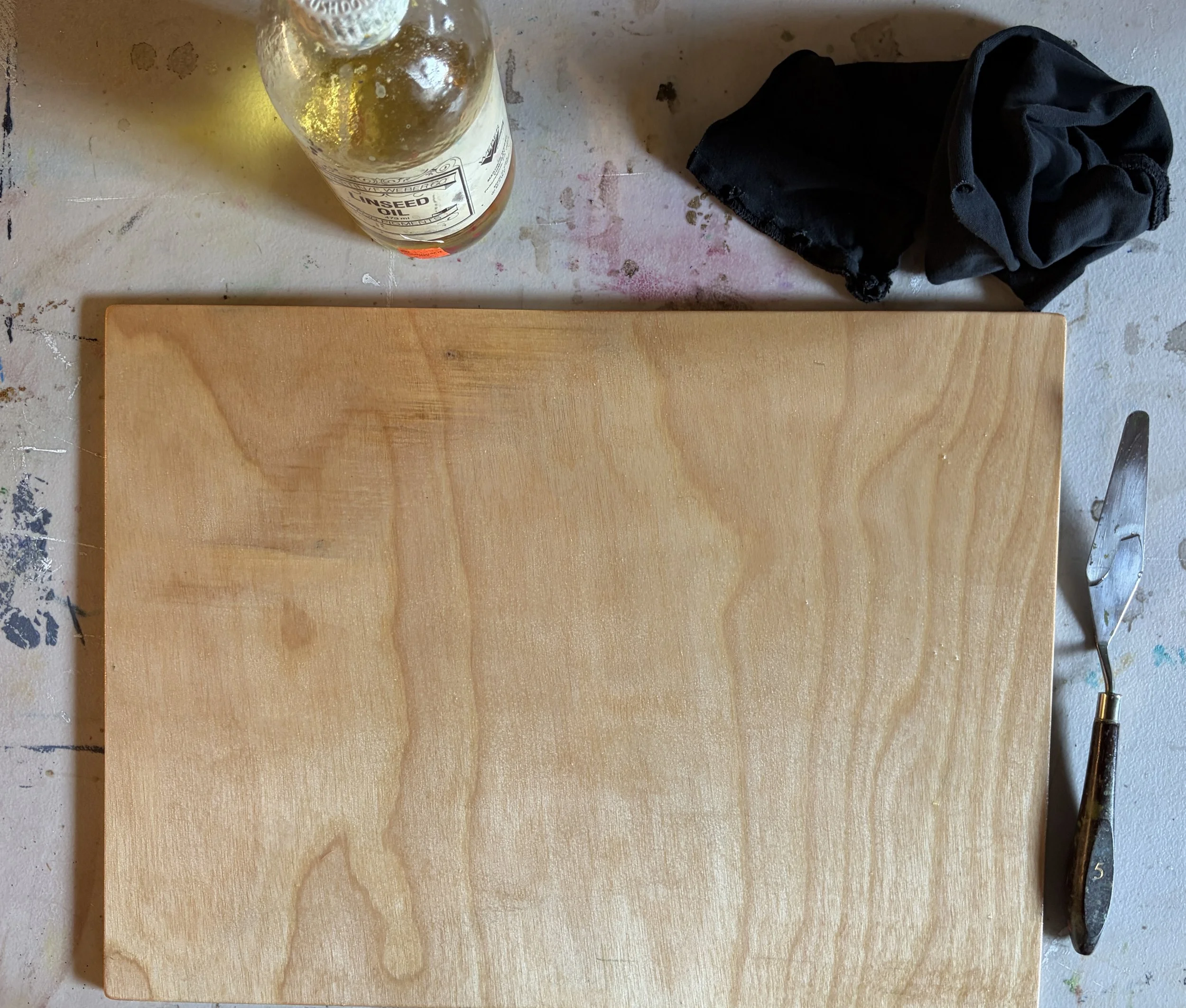
The number of layers you prep your palette with is up to you. Each successive layer absorbs less oil.
Several coats is best, but honestly, It’s fine to use after the first layer. This isn’t furniture - you don’t need to let it dry completely either. Your goal is just to keep the board from absorbing too much oil from your paint.
Your wooden palette will get better with time. Each time you clean up, wipe a few drops of oil into the surface. Eventually you could get a glassy shiny finish. The finish will develop and improve over time.
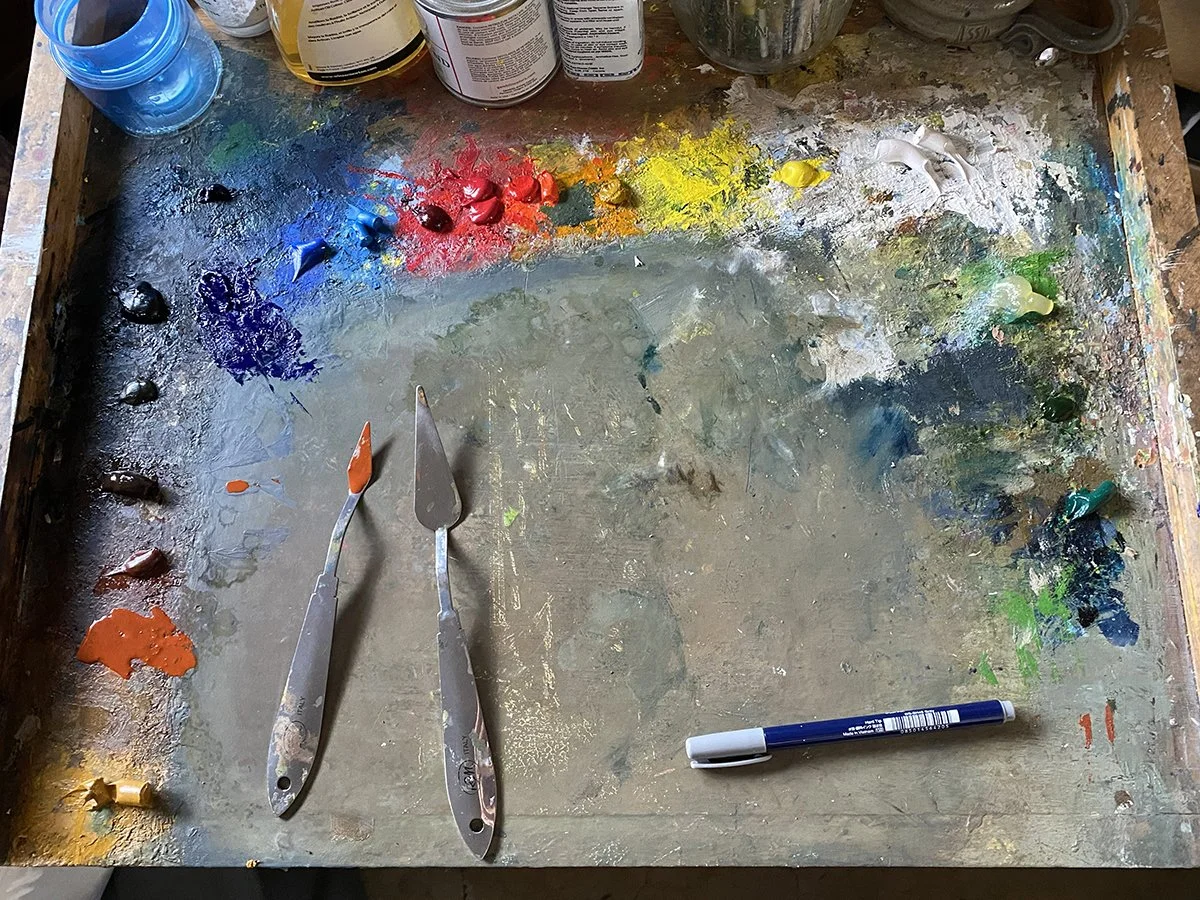
Well used wooden palette - getting a bit gray from use. That’s normal and even desired.
Once you have added linseed oil, you're ready to paint! Remember to always set up your paint on the outer edges of your palette, preferably in a prismatic arrangement, and always put your paint in the same place, every time.
Use the large central area for mixing. When you're done mixing for the day, scrape off your excess paint with a palette knife and then wipe the surface with a clean cloth. Once you have the paint removed, use a few drops of linseed oil to further clean and add to the lovely patina of your palette. Over time your palette becomes a nice middle gray tone. The surface gets glassy and non-porous and is a great surface for mixing colors.
If you would like to get a raw wooden palette - I have some for sale!
12” x 16” x 1/4” birch wooden palette - sanded and ready for you to prep for oil painting!
Most rectangular wooden palettes have annoying and uneccesary thumb holes. The thumb holes in this kind of palette are theoretically there for you to hold the palette when you paint. HOWEVER, I have never seen an artist holding one of these rectangular palettes when they paint! Because they are not balanced your arm would cramp and become exhausted very quickly. If you want to hold your palette - get a balanced hand palette! (Do not just buy a crappy one - they aren’t truly balanced.) This listing is for a simple rectangular palette without the annoying thumbhole. It’s a simple thing - but it’s great to have that little bit more room to mix! Yay!
Learn to prepare your wooden palette for oil painting HERE.
Learn about thumbholes and balanced palettes HERE.
Learn to organize your palette HERE.
-------
This item is carefully packed and shipped via USPS. All items are packed and shipped promptly (within 1-2 business days of purchase). Local pick-up is free.
Returns accepted within 30 days of purchase, in original condition. All return packing and shipping costs are paid by the purchaser and not refunded.
Happy Painting!
PS.*In this video you will see a palette with the pigments labelled - this is the palette of the artist Lupe Galvan.